Women's Self Defence Programs
All programs can be customised to suit your specific needs.

Duration
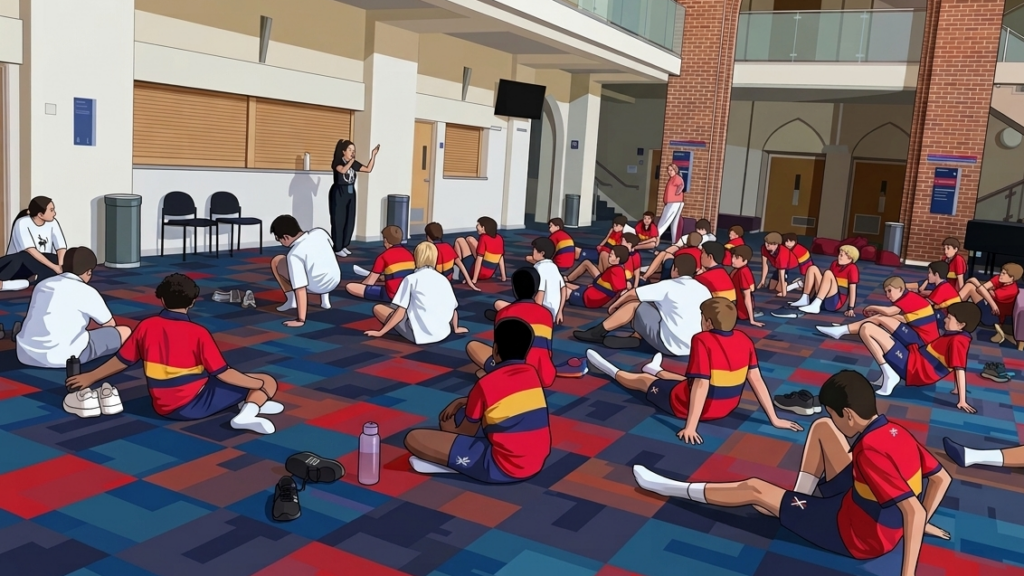
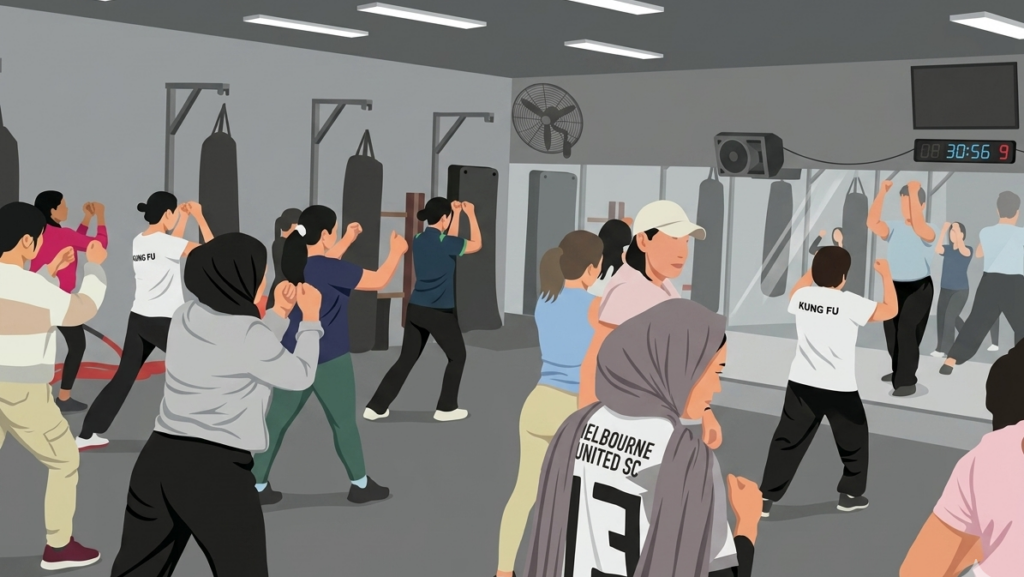
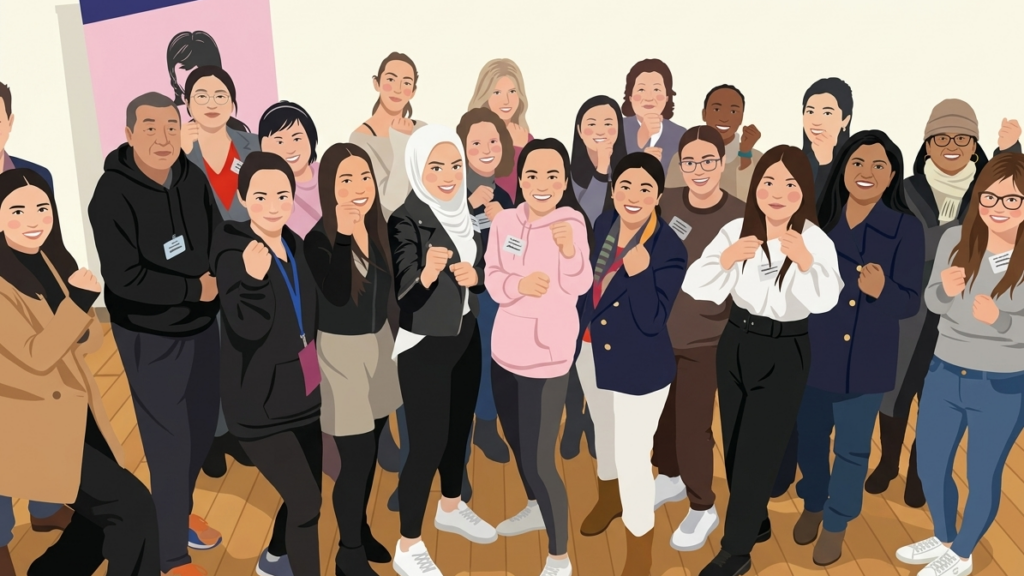
Self-defence sessions typically range from one to two hours. Longer sessions allow for deeper physical conditioning, as the body adapts through gradual biological processes, while the mind absorbs information more quickly. However, even a one-hour session is valuable, and all training can be tailored to fit your availability.
Types of programs
There are two main program formats:
- Workshops
- Courses, consisting of structured, sequential sessions with progressive levels and certification
Locations
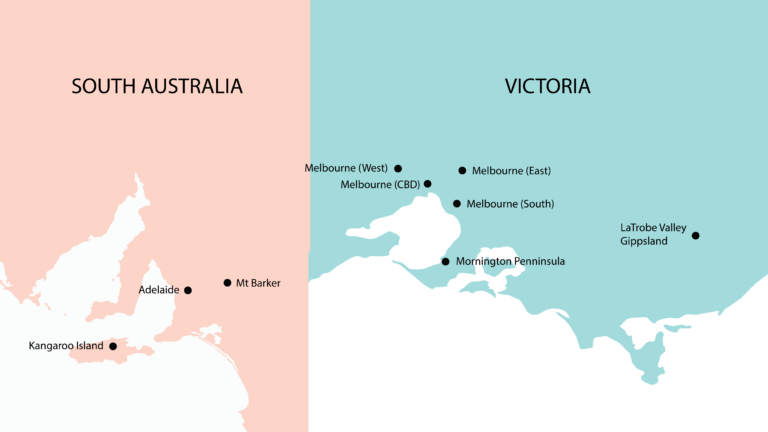
We cover primarily the Melbourne area. We’ve recently made our workshops and courses are available in the LaTrobe Valley (Gippsland, Vic) and Adelaide, South Austalia.
See our Instructors page for more information.
Workshops
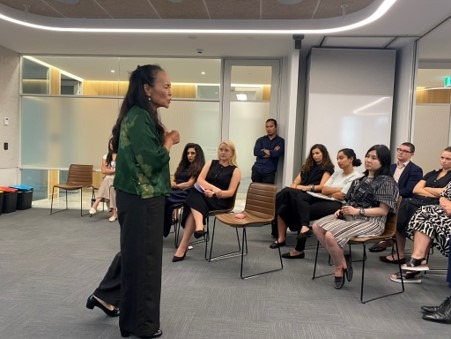
Workshops generally run for two to three hours (including a short break), while full-day workshops can extend to approximately six hours, with a scheduled lunch break.
Workshops provide an overview of the fundamentals in physical defence and mental strategies. They introduce participants to the practical options available when confronted with danger, while also debunking common myths and misconceptions about self-defence.
Learning
Learning Goal 1. Physical: Participants will learn a few basic but effective delf defence techniques reaching the cognitive stage where they can understand and consciously apply the skills with limited capacity.
Learning Goal 2. Mental: Through sharing and storytelling, participants will acquire essential safety strategies for home and public environment, while building confidence and gaining insight into their own inner strength.
Venue
Venue:
- We will come to your community centre.
- An empty room is all that is required; an empty room for a small group or gymnasium or an assembly hall or auditorium/theatre if it is for a large group.
Fees
Fees:
Rates range from $250 to $1,500 per hour per instructor. Subject to availability. However, we have on occasion, provided this service free of charge, depending on the nature of the community group and its charitable purpose.
Chief Instructor ($1500/h): Award winning, world renowned founder with 35 years experience in women self defence instruction.
Certified Instructor ($250/h) : Fully qualified Instructor with Certificates from Martial Arts Australia, Confucius Institute, Victoria University and Anne Pang Self Defence Inc..
The ratio of instructor to students is usually 1:20
This also includes:
- Travelling costs
- Equipment
- Insurance
Example:
2 hour workshop for 30 people. 1 chief + 1 certified instructor.
$1250 x 2 hours = $2500
2 certified instructors x 2 hours = $500
Courses
How to choose?
You can choose from the three levels based on your time availability and budget and of course email us anytime to discuss info@annepangselfdefence.com
Which to choose?
If you’re unsure where to begin, you can start with the Essential Level and extend your training to progress into the Intermediate Level, as the sessions are designed to be sequential.
Certificates
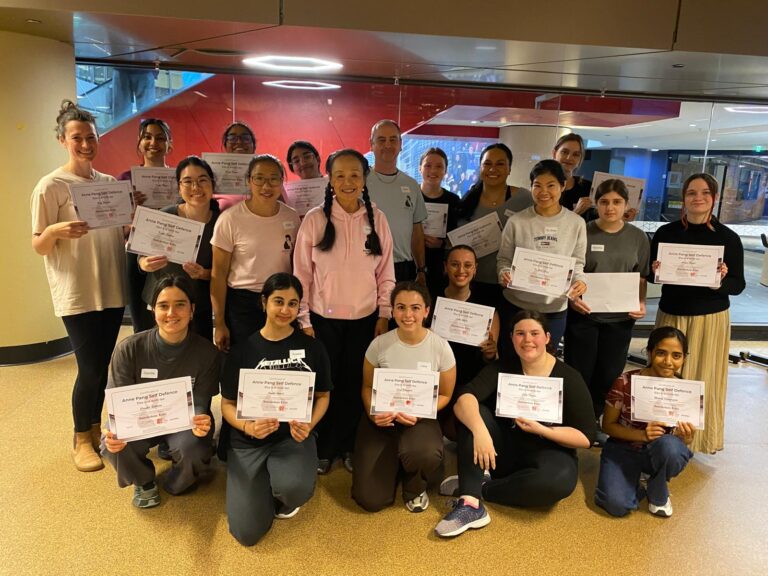
Participants complete a multiple-choice assessment on safety strategies, along with a practical evaluation of their techniques at the end of each level. Certificates are awarded upon successful completion.
Why examinations?
These assessments reinforce learning under pressure and create a positive experience of overcoming fear. By successfully performing in these moments, participants can anchor this achievement in their memory, internalising a lasting sense of their own strength, confidence, and capability.
Level One – Essential (Approx. 4–6 Hours)
Duration
4–6 hours, delivered in flexible formats:
- 3 × 2-hour sessions
- 1 × 5-hour session (with breaks)
- 4 × 1-hour sessions
Participants
Women only.
Aim
To introduce the fundamental physical and mental principles of self-defence, equipping participants with essential skills for personal safety at home and in public, particularly in situations involving strangers.
Participants will learn core techniques and practical strategies to respond to common attacks, while also developing awareness and preventative thinking for everyday safety.
Physical Training
- Six fundamental self-defence techniques for women
- Defence against front strangle attacks
- Foundational stance for balance, mobility, and stability
- Developing a confident guard and effective striking posture
- Understanding differences in how men and women are commonly attacked
- Principles behind effective women’s self-defence
- Correct fist formation and guarding techniques
- Repetitive drills to refine and embed techniques
- Progression from cognitive to associative learning
- Use of punching and kicking bags to build power and confidence
- End-of-course assessment with certification
Punching and kicking bag work is incorporated to create a powerful “flashbulb” moment, where participants experience their own strength firsthand. This pivotal moment of self-realisation leaves a lasting impression and reinforces the true essence of self-defence—self-worth and self-confidence.
Mental Training
This level focuses on situational awareness and early prevention strategies. Through real-life examples and shared experiences, participants gain practical knowledge they can immediately apply in daily life.
Key topics include:
- Safety when home alone
- Home security awareness
- Safety in public: selection (awareness and avoidance)
- Safety in public: testing (recognising and responding to potential threats)
Intermediate Level – Approx. 7–14 Hours
Duration
12–14 hours, delivered in flexible formats:
- 7 × 2-hour sessions
- 7 × 1.5-hour sessions
- 7 x 1hour sessions (condensed format with more limited instructional depth)
This extended time frame allows participants to develop the muscle memory required to apply techniques effectively.
Participants
Women only.
Aim
To build on the foundations established in the Essential Level by developing the application of techniques in more dynamic and realistic scenarios. In addition to reinforcing preventative strategies, this level introduces safety considerations for public transport, private vehicles, and interactions with known individuals.
Physical Training
Participants will apply foundational techniques in controlled, practical settings to build confidence and effectiveness.
- Revision of six fundamental self-defence techniques
- Defence against front strangle attacks
- Refinement of stance, balance, mobility, and stability
- Developing a confident guard and effective striking
- Understanding gender-based patterns in physical attacks
- Principles behind effective women’s self-defence
- Repetitive drills to strengthen technique and response
- Progression from cognitive to associative learning
- Application of techniques against partners in a safe environment
- Introduction to timing, distance, and controlled physical engagement
- Use of punching and kicking bags to build strength and confidence
- End-of-course assessment with certification
A key highlight remains the “flashbulb” moment, where participants experience their own strength firsthand—reinforcing self-worth and confidence at the core of self-defence.
Mental Training
Mental Training
This level deepens situational awareness and prevention strategies through real-life scenarios and shared experiences.
Key topics include:
- Safety when home alone
- Home security awareness
- Safety in public: selection (awareness and avoidance)
- Safety in public: testing (recognising and responding to threats)
- Safety on public transport
- Safety in private vehicles
- Safety in situations involving people you know
Proficient Level – Approx. 10–20 Hours
Duration
18–20 hours, delivered in flexible formats:
- 10 × 2-hour sessions
- 10 × 1.5-hour sessions
- 10 x 1 hour sessions (condensed format with more limited instructional depth)
This extended duration allows participants to develop strong muscle memory, enabling techniques to be applied more instinctively and automatically, even under pressure.
Participants
Women only.
Aim
To develop reflexive responses to common attacks by reinforcing and advancing techniques learned in the Intermediate Level. This stage focuses on applying skills instinctively, even in high-pressure situations, while cultivating the mindset required to manage and overcome fear.
Physical Training
Training at this level emphasises reflex development, adaptability, and confidence under pressure.
- Application of foundational techniques against frontal, rear, and varied attacks
- Maintaining strong stance and stability against push and pull forces
- Turning and repositioning effectively to face an opponent
- Partner training with individuals of similar and varied sizes
- Circle training to simulate dynamic and unpredictable scenarios
- Use of protective gear to allow for more realistic application of techniques
- Training drills performed with eyes closed to build instinctive response and confidence
- Reinforcement of techniques to develop automatic, reflexive reactions
- End-of-course assessment with certification
Mental Training
This level deepens situational awareness and introduces more complex real-world considerations, with a strong focus on managing fear.
Key topics include:
- Safety in situations involving people you know
- Bystander intervention
- Safety on public transport
- Safety in private vehicles
- Coping with fear
The exploration of fear is a defining element of this level. Participants examine how fear impacts response under pressure and learn practical strategies to manage it effectively—ensuring they can apply both mental and physical skills when it matters most.
If you’re unsure which level to choose or would like guidance on your training journey, please feel free to reach out. We’re happy to discuss your goals and answer any questions. Contact us at info@annepangselfdefence.com or call Anne on 0403 050 322.